Saturday, July 18, 2020

Lobster: 15 Fast Facts

Lobsters are greenish until cooked; then they turn red.
       The lobster is one of the most singularly-formed members of the animal kingdom, called a crustacean by the scientist because it is invested with an outer hard, shell-like surface, or crust. As a crustacean, the lobster is related to the shrimp, crab, barnacle, etc.

15 Fast Facts About Lobsters:
  1. The body of the lobster has seven distinct segments, while thirteen minor ones, which form the thorax and head, are so blended together as not to be easily distinguished.
  2. The animal has two pairs of antennae and six pairs of mouth organs.
  3. The first pair of legs is long and terminates in large claws, one of which is thick and very heavy and is used for crushing objects.
  4. The other claw is shorter, smaller, more or less curved, toothed and pointed at the tip.
  5. The claws are really pinchers, which can be closed when fighting or when the animal seizes its prey.
  6. The tail is composed of the last segment and has two wide appendages on each side, making a broad incurved organ, which the animal uses in swimming.
  7. By straightening this tail and drawing it forcibly under, the lobster is thrown backward through the water at a rapid rate.
  8. The animal has two large, compound eyes, situated at the end of thick stocks.
  9. Its senses of hearing and sight are keen.
  10. The female carries her eggs on the under side of the abdomen until they hatch, when the young are driven away and for a time swim about freely near the surface.
  11. After about a month they descend to the bottom, where they remain. The lobster lives on the bottom of the sea and rarely rises more than a few feet from it.
  12. It walks about on the tips of its legs, extending the large claws forward and pushing itself along by the swimming feet.
  13. Lobsters are highly esteemed for food. They are caught in pots, which are traps made of wood, sunk among the rocks in the clear water in which the animals live. The pots have a funnel-shaped opening and are baited with fresh meat, which attracts the lobsters.
  14. When they have once entered the trap they are unable to escape.
  15. When taken from the water the lobster has a greenish appearance. The brilliant red color of those placed upon the market is produced by boiling.

Woodcock

       A woodcock is a bird belonging to the same family as the snipe, differing from the latter in having a more bulky body and shorter legs. It is widely distributed over North America, Europe, Northern Asia and Japan. It spends the summers in pine forests and the winters in southern swamps and moist woodlands, where worms, snails and slugs are plentiful. It is active by night and quiet during the day. If discovered near its nest it feigns injury, or it may carry its young away to safety, one at a time, between its thighs. The bird is about twelve inches long. The upper plumage is an intermingling of ruddy, yellowish, and ash, and is marked with black spots. Underneath, it is yellowish red with zigzag markings. The eyes are large and are set far back. The bill, nearly half the length of the body, is used with great skill in digging worms.

More From The Web About Woodcocks:
Lang Elliott filmed the American Woodcock

Locust: 12 Important Facts

Locust, the name applied rather loosely to several insects related to the grasshoppers. In the United States, the cicada, harvest fly, is called a locust, while the real locust of that country is known as the red-legged grasshopper.

12 More Facts About Locust:
  1.  The hind legs of the locusts are large and powerful, so that they have great power of leaping, but their antennae are shorter than those of true grasshoppers.
  2. They make their peculiar "notes" by drawing their hind legs across their wing covers.
  3. When flying they produce sounds by rubbing their front and hind wings together.
  4. The Rocky Mountain locust breeds west of the Mississippi River and east of the Rocky Mountains, selecting places along river bottoms or in grassy places of the mountains in the northern part of the region mentioned.
  5. The female lays twenty-five or more eggs, cementing them carefully together and covering them with a case, or cocoon, which she buries in the sand.
  6. From the first, the young resemble their parent, and after frequent molting they reach their full size in about seven weeks.
  7. On reaching maturity locusts gather in flocks and begin incredibly long migrations, with an apparent definiteness of purpose and regularity of movement that no other insect ever shows.
  8. Sometimes they appear in such vast numbers as almost to obscure the light of the sun; toward night or on cloudy days they settle down on the earth and devour everything green they can find. Sometimes within a few hours whole acres of flourishing vegetation have been destroyed.
  9. In 1874 the locusts overran the whole territory west of the Mississippi, and it is estimated that $50,000,000 would not cover the damage they did.
  10. The next year 750,000 people were made destitute or suffered severely in Kansas, Nebraska and Missouri. Since that time, though there have been numerous flights of locusts, they have not appeared in such destructive numbers, and it is thought that the cultivation of the land and the destruction of their breeding places have made impossible anything of the kind in the future.
  11. Migratory locusts are found also in Asia and Africa, where their flights have been as destructive as those of the locusts in America.
  12. Arabs and other people of the East frequently use the dried insects as food.

The Great North American Locust Plague by MinuteEarth
 
 
Arthropoda: spiders, insects, crabs etc...

Elephant: 33 Facts

Both male and female African elephants have tusks.
 However, only some male Indian elephants
 have tusks today.
       The elephant is the largest living land animal, comprising two species, the African and the Asiatic.

33 Facts About Elephants:
  1. The African elephant is the larger, stronger and more ferocious of the two, its hide is tougher and its ears larger, its head is less elevated.
  2. Its back slopes downward from shoulders to rump.
  3. Its trunk is longer and drags on the ground, even when the end of it is curled.
  4. Both sexes have tusks.
  5. The Asiatic, or Indian, elephant, as it is often called, is smaller.
  6. The Asiatic elephant's back is decidedly rounding, and only the males bear tusks.
  7. It is this elephant which is seen at circuses, for unlike the African elephant, it is tame in captivity.
  8. Sometimes elephants attain the height of fifteen feet, but usually a mature animal is from nine to ten feet high and weighs from 4,000 to 10,000 pounds.
  9. The body is very bulky, the legs are enormously large and almost straight and the short toes are covered by hoof-like nails.
  10. The skin of the elephant is very thick and coarse, and it bears only here and there a few scattered hairs.
  11. The most remarkable feature of the elephant is its long trunk, an extension of the nose. It has two tubes extending to the tip.
  12. This tip is exceedingly sensitive, and in one species it is furnished with two small projections; one, which somewhat resembles a finger, extends from the upper surface, the other projects from the lower side.
  13. By means of its trunk, the animal can pick up very small objects.
  14. The trunk is provided with very strong muscles and is useful in procuring food and for defense.
  15. With his trunk the elephant picks up and puts into his mouth all his food and water.
  16. With its trunk, the elephant makes a loud trumpeting noise, his signal of alarm or anger.
  17. The cutting teeth on each side of the upper jaw develop into long tusks, useful to the animal in a natural state both for grubbing food and for defending itself against attack.
  18. In some well-grown males each tusk weighs as much as 200 pounds.
  19. Although the head of the elephant is enormously large, and its forehead broad, yet its brain is small.
  20. However, this does not show any lack of intelligence, for no animal, with the possible exception of the horse and dog, can be taught to do more things requiring intelligence than the elephant.
  21. Elephants live in herds of considerable size, but the old males sometimes leave the herds or are driven from them, and thereafter live solitary lives.
  22. They usually become vicious and exceedingly destructive sometimes demolishing native crops. Such elephants are commonly called rogues.
  23. The wild elephants are caught in various ways. Sometimes pits are dug, into which the animals fall; or, a strong enclosure is built, into which the elephants are driven by fires, gun shots or other loud noises.
  24. In some localities trained elephants are sent out into the forests to make the acquaintance of wild ones and lead them into captivity.
  25. Two tame elephants can keep a single wild one so interested that the hunters are able to come up and put heavy chains about its legs and tie it to a tree, where it is held during the furious anger which follows its capture.
  26. After a long and tedious struggle, the captured elephant is subdued and then becomes tame and submissive.
  27. Elephants have been known since very early times. The earliest records in history tell us that they were trained by man to do various things even to take part in war.
  28. Hannibal had with him an army of elephants when he invaded Italy, and much of his success was due to the terror they inspired.
  29. The animals have been used to a greater extent in India than in any other country.
  30. There they have been for centuries a chief means of conveyance, carrying passengers in commodious canopied seats on their backs.
  31. Two or more persons may occupy this seat; the driver sits on the animal's neck.
  32. Elephants can be taught to do numerous kinds of work, to Lift great weights and to carry heavy loads.
  33. Many elephants were once held in captivity, altogether for show purposes. There was hardly a zoological garden in existence that did not have one or more of these animals.

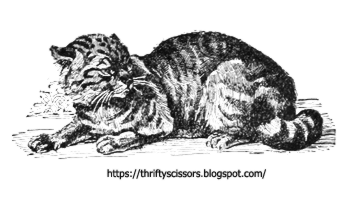
Wild Cat

Wild Cat or Catamount, a wild animal belonging to the same family as the domestic cat, but of larger size than the latter. The European wild cat once common, but now seen only in the most isolated regions, has a very long body and legs and a short, thick tail. Its fur is yellowish-gray, with a dark marking down the back and other dark stripes on the sides and rings on the tail. In the United States the name is often applied to the lynx.

More About Wild Cats From The Web:

Friday, July 17, 2020

Whip-poor-will


       Whip-poor-will, a North American bird of the goatsucker family. The name is an imitation of the bird's peculiar call of three shrill notes ending in a rising inflection.  This weird cry is repeated many times in close succession. The whippoorwill makes its home in the midst of thick woods, rarely visiting the haunts of men. It is active at night, feeding on night insects, which it catches on the wing. During the day it sits lengthwise on a limb, where, owing to its mottled plumage, it is not easily seen.


More About Whip-poor-wills On The Web:

Vulture

Vultures are characterized by their
featherless necks.
       Vulture, the common name for a class of carrion-eating birds, characterized by necks destitute of feathers and by elongated beaks, with curved upper mandibles. Their talons are not relatively strong, and in tearing prey apart, they make more use of their beaks than of their claws. Vultures are usually of a cowardly disposition and will not attack live animals, unless the latter are seriously wounded or dying, as they feed almost entirely on decaying animal flesh. They fly high in the air and detect their prey from great distances. They are valuable scavengers in all warm and tropical countries. 

Two More Vulture Types:
       The California vulture has a long, flat, orange-colored head and dull black plumage, with a grayish wing band. It builds a loose nest of sticks, in a hollow in a tree or cliff, and lays one round, greenish-white egg. 
       The Egyptian species, called "Pharaoh's hen," is found in the countries bordering the Mediterranean.

More From The Web About Vultures:

Wagtail

Courtship of wagtails caught on
 video by Shirishkumar Patil.

       The wagtail are a group of birds so called from their habit of jerking their long tails when running or perching. Though several species are common in Europe, rarely is the bird seen in the United States. The wagtails frequent muddy lands and pastures, running rapidly along the edge of water and catching the insects they find there. A species of wagtail breeds on the coasts of Alaska in summer, making its nest of woven roots and grasses on or near the ground. The eggs are white with brown spots.

Learn More About Wagtails From The Web:

Whales: 12 Facts About Whales

Whales come in two classifications:
those with teeth and those without.
   The whale, a large marine animal, some species of which are the largest animals in existence. Though often classed as a fish, the whale bears only a superficial resemblance to the fishes. The tapering body terminating in a finlike tail and the fin-shaped paddle on each side of the body are the only points of similarity, while the dissimilarities are numerous and fundamental.

12 Facts About Whales:
  1. The whale first of all, is a mammal, bearing its young alive, and suckling it in infancy.
  2. It has well-developed brain and lungs, and warm blood, which circulates through veins and arteries. 
  3. Its bones, joints and muscles are like those of the higher land mammals. 
  4. The forelimbs contain the same bones as do those of other mammals. These are proportionately short, and, instead of toes, there is a paddle, about seven feet long, formed by a continuous skin; while in the rear part of the body are rudimentary bones which indicate the existence of hind legs in remote ancestors. 
  5. The organ of locomotion is the fin-shaped tail, which is also used for purposes of defense. 
  6. The whale is a shy creature and becomes combative only when attacked. 
  7. When aroused it can capsize a large vessel with its tail, which is from five to six feet long and twenty to twenty-five feet broad, and destroy smaller craft by ramming it with its blunt nose.
  8. Two distinguishing characteristics of whales are the proportionately large head, which is usually a third of the entire length of the body, and the thick layer of fat beneath the skin, which protects the animal from the cold. 
  9. This fat, called blubber, was cut from the captured animal and reduced to oil many years ago. Before mineral oils came into general use, whale oil was burned in lamps in every part of the world.
  10. The eyes of whales are small and there is usually only one nostril, frequently S-shaped, situated on top of the head. It is closed by a plug-like valve, opened only by pressure from inside. 
  11. When the whale comes to the surface it expels the air from its lungs with great force through this nostril; and the hot, moisture-laden breath condensing in the cold air produces a column of vapor several yards high. 
  12. The notion that a whale takes water into its mouth and blows it out through this hole is erroneous. The whale's mouth is large, but the throat is very small; however, a species known as the Greenland whale has a throat large enough to admit a man's body.
Two Classes of Whales:
       Whales usually are divided into two classes - the whalebone whales and those having teeth. The toothless whales were commercially the more important, and are hunted for both oil and whalebone, which latter is taken from the animal's mouth. The roof of the mouth is provided with vertical horny plates, called baleen, about 500 in number. These plates hang from the roof of the mouth in a fringe ten or twelve feet long. This equipment serves as a sieve for straining out the minute animals on which these whales feed. The surface waters of the ocean teem with animal life, and whales in feeding swim with open mouth at high speed near the surface, traveling in this way until hunger is satisfied. The manufacture of cheap substitutes for whalebone greatly decreased the commercial importance of whalebone whales.
       The toothed whales are the larger, attaining a length of ninety feet and a weight of seventy tons. The young when born are from ten to fourteen feet long. Of these the sperm whale was the most valuable to hunters. The blubber produced sperm oil, while the oil of the head yielded spermaceti, used in making candles and cosmetics. Other valuable products made from this whale long ago were ambergris, found in the intestines and used in making perfumes.

Learn More About Whales From The Web:
       Before the middle of the eighteenth century whaling was an important industry, but since the discovery of petroleum it has rapidly declined. Modern whaling operations are conducted with swift vessels, and the whales are killed by harpoons shot from guns. On every coast where whale fishing is conducted there are stations along the shore to which the carcasses are towed and cut up and prepared for market. Since 1986, IWC, has banned the fishing for whales except by aboriginal peoples.

Save The Whales From Extinction:
See People Work Hard To Save These Endangered Giants:
Now People Perform For Whales:

Bat: 11 Facts

A bat is a furry mammal having the fore limbs peculiarly modified so as to serve as wings. Bats are animals of the twilight and darkness and are common in temperate and warm regions, but they are most numerous and largest in the tropics. 

11 Facts About Bats:
  1. All European bats are small and have a mouselike skin. 
  2. The body of the largest British species is smaller than that of a mouse, but its wings stretch about fifteen inches. 
  3. During the day it remains in caverns, in the crevices of ruins, hollow trees and other lurking places, and flits out at evening in search of food, which consists of insects. 
  4. Several species of the same genus are common in North America. 
  5. Many bats are remarkable for having a curious growth on the nose shaped something like a horseshoe. In some bats these growths resemble leaves, and in one species the entire nose looks like a flower. 
  6. The eyes in most bats are very small, but they are keen.
  7. Bats may be conveniently classified in two sections: the flesh-eating, comprising all European and most African and American species, and the fruit-eating, belonging to tropical Asia and Australia, with several African forms. 
  8. At least two species of South American bats are known to suck the blood of other mammals, and hence they are called vampire bats, though the name has also been given to a species not guilty of this habit. 
  9. As winter approaches, in cold climates bats seek shelter in caverns, vaults, ruined and deserted buildings and similar retreats, where they cling together in large clusters, hanging head downward, and sleep until the returning spring recalls them to life. 
  10. The brown bat of the United States, the heavy bat of the Eastern states, the big-eared bat of the Mississippi valley, the leaf-nosed bat and the lyre bat are common species. 
  11. Bats belong to the order Chiroptera

The types of bats pictured above with corresponding numbers.

1-2: Brown Long-eared Bat
3: Lesser Long-eared Bat
4: Lesser False Vampire Bat
5: Big-eared Woolly Bat
6-7: Tomes's Sword-nosed Bat
8: Mexican Funnel-eared Bat
9: Antillean Ghost-faced Bat
10: Flower-faced Bat
11: Greater Spear-nosed Bat
12: Thumbless Bat
13: Greater Horseshoe Bat
14: Wrinkle-faced Bat
15: Spectral Bat

Scotch Terrier


       The Scotch Terrier is a small dog weighing from fourteen to twenty pounds, with a long head, dark eyes and upright ears. The hair is rough and coarse, and may be black, reddish, brindled or sandy. The tail is carried erect. The dogs are intelligent, gentle and active and were favored pets seventy years ago.

More About Scotch Terriers From The Web:

Ground Squirrel

       A ground squirrel is a squirrel in that they possess cheek pouches and retreat into burrows. They are well known in America, but species are also found in Asia and Africa. 

Babirussa

Indian wild hogs have teeth that grow outside of their mouths.
       The babirussa or babyrussa is a wild hog which inhabits Celebes and other East Indian islands. It is an active animal, with a nearly naked skin, and does not root in the ground as do other members of its family. The upper canine teeth do not grow downward, but upward, through openings in the skin of each side of the snout, and they curve backward nearly to the eyes. The natives still hunt the babirussa for its delicately flavored flesh.

More From The Web About Babirussa:

Waxwing

Waxwings survive primarily on fruits.
       A waxwing is a handsome singing bird, distinguished by its high, pointed crest, yellow band across the end of the tail and red spots on the wings, which have the appearance of sealing wax. The body plumage is reddish-brown above, yellowish underneath. 
       The cedar waxwing is found in nearly every part of North America, and may be seen in summer as far north as Southern Alaska. It feeds on insects and fruits, and nests in trees. The eggs are putty-colored, with black specks. 
       The Bohemian waxwing, a familiar bird in both eastern and western hemispheres, also migrates to high latitudes in the nesting season, traveling, like the cedars, in small flocks.

Learn More About Waxwings From The Web:

Wolf: 6 Fun Facts

Wolves are allied to the dog.

A wolf, a carnivorous animal, allied to the dog. 

6 Fun Facts About Wolves:
  1. The common European wolf, was found almost everywhere in North America, also, is yellowish-gray, with a blackish band, or streak, on the fore legs.
  2. The ears are erect and pointed. 
  3. The hair is harsh and strong, the tail straight, bushy and drooping. 
  4. The height at the shoulder is about two and a half feet. 
  5. The wolf is swift of foot and crafty, a destructive enemy to sheep and poultry. 
  6. It runs in packs, to hunt the larger quadrupeds, such as deer and elk. 
       In general, however, wolves are timid and stealthy. They were once plentiful in some parts of Europe and the United States. They probably ceased to exist in England about the end of the fifteenth century. The small prairie wolf or coyote, living on the American plains of the United States, is a burrowing animal.

More About Wolves From The Web:

Zebra

The zebra is a wild animal of South Africa, closely related to the wild ass and the horse, and having habits similar to those of the latter. It is grayish or cream-white in color, and is conspicuously marked with dark stripes on head, legs and body. 
       In Africa zebra-hunting was once a popular sport. Native people once ate the flesh of zebras and used their hides for leather and as rugs. Until recent times great herds of zebras were common in Southern Africa; today the animals are rare. The zebra most frequently seen in Africa and in menageries.

Learn More About Zebras From The Web:

A paper jointed zebra toy for students to print, cut and assemble.

Zebu: 4 Basic Facts About

You can see the fatty hump on the back of a zebu.
The zebu, a species of ox, a native of India, whence it has spread into Persia, Arabia and Eastern Africa. It is used as a beast of burden, for plowing and hauling. The animal is remarkable for a convex forehead, short horns, large drooping ears and a fatty hump on the back. It is very gentle and docile.

For Basic Facts About The Zebu:
  1. Zebus vary greatly in size, the smallest being no larger than a large dog, while others are the size of a large ox. 
  2. The colors vary.
  3. The white zebu bulls are regarded as sacred among the Hindus (who call them hrahmany) and are allowed a free range. 
  4. Zebus have been imported to Jamaica and Central America for use on farms.

A Zebu Called Angel.

Widgeons


       A widgeon is a wild duck found in both Europe and America. The American widgeon, which is most abundant in the South, is often called the bald pate, from the white on the top of its head. It spends the winters in Central and South America and nests in Canada. The eggs, from seven to twelve in number, are buff-white. Widgeons are notorious for their trick of robbing canvasbacks and other diving ducks of the plant food picked from the beds of streams, by snatching it from their bills as they come out of the water.

More About Widgeons From The Web:

Vole: 4 Primary Facts

A vole is a creature belonging to the rat species.
Vole, an English name applied to several species of the rat family. 

4 Primary Facts About Voles:
  1. The voles are widely distributed, being found in Europe, Africa, Asia and in North and South America.
  2.  The water vole is about the same size as the brown rat, and it is often called a rat. 
  3. It has dark brown or black fur, a tail about half the length of the body, and very strong hind feet, with five rounded pads on the lower surfaces. 
  4. It burrows by the banks of streams and feeds for the most part on vegetable food. 
2 More Types of Voles:
  1. The field vole, or short-tailed field mouse, is about the size of a common mouse, but the body is stouter and the tail shorter. It has brownish-gray fur; its hind feet have six pads. It lives in fields and woods, feeds on vegetable food, is very prolific and often does much damage to grain and other crops. 
  2. The hank vole is like the field vole, but it has a rusty-colored back, larger ears and a longer tail.

Watch young voles by seahue.

Thursday, July 16, 2020

Barnacle Goose

Barnacle Goose Facts by Animal Fact Files.

       A barnacle goose is a wild goose common in Europe as a summer visitant in the North Sea. Its forehead and cheeks are white and the upper body and neck black. It takes its name from an old superstition that it was produced from the barnacles that grow on rocks.

Learn More About Barnacle Geese From The Web:

Woodpecker: 6 Fascinating Facts

Woodpeckers often feed on insects that
burrow inside trees.
Woodpecker, the name of a large group of climbing birds, of which there are  a number of different species. 

6 Facts About Woodpeckers:
  1. They have long, straight, angular beaks, adapted to perforating the bark of trees.
  2. Their tongues are long, slender and armed with a barbed, horny tip. 
  3. They can thrust their tongues far out of their mouths and so spear insects in the depths of their burrows. 
  4. Their tongues are also covered with a sticky, slimy substance, that helps to hold their prey. 
  5. When feeding, they usually ascend the tree spirally, aided by the spiny points which terminate their tail feathers. 
  6. They tap here and there on the tree-trunk, searching for the holes in which insects are hidden, and often tear aprat large parts of rotten trees, for the larvae concealed in them.

5 More Types of Woodpeckers:
       The sop slicker is a species that is fond of the sap of trees and bores round holes, which it arranges with geometrical exactness in broad bands around the trunk of a tree. It especially favors the pines, and in feeding it moves about over the checkerboard of holes, taking the sap from them regularly, as it accumulates. 
       The ivory-billed woodpecker of the southern United States is a large bird, about twenty-one inches long, bright black and white in color, the male having a large bright scarlet crest. Like most of the other woodpeckers, this one excavates its nest in suitable dead trees. 
       The red-headed woodpecker, the black and white woodpecker, the hairy woodpecker and the downy woodpecker are well known in the Northern states. The redheaded woodpecker often lights on the shingles of houses or on a hollow branch and strikes his bill in a noisy clatter, stopping now and then to call out his hoarse, rough note. The woodpeckers are found in almost every temperate part of the globe, except that none ever existed in Australia and Egypt. 

More About Woodpeckers From The Web:

Walrus

The biggest danger for walrus today is climate change.
 
       Walrus is a marine flesh-eating mammal, related to the seal, and inhabiting the colder climates. It has two large, pointed  tusks, from fifteen inches to two feet in length, directed downward and slightly outward from the upper jaw. The tusks are used in digging up clams and other food from the bottom of the sea. The animals were valuable to hunters at one time because of their hides and oil. They were either killed with rifles or taken with harpoons.
 
Handprint or hand-tracing and paper cutting of walrus with tusks, whiskers and snouts!
 
More About Walrus From The Web:

Barnacle

       Barnacle is the name of a family of marine crustaceans, or water-breathing animals, having a crust-like shell or scab enclosing them. This mantle or shell is composed of five principal valves and several smaller pieces, joined together by a membrane attached to their circumference; and they are furnished with a long, flexible, fleshy stalk, provided with muscles, by which they attach themselves to ships' bottoms, submerged timber, rocks and the like. One species, the acorn barnacle, has no stalk, but has a hard, acorn-shaped shell of many leaf-shaped valves.
       The structure of the barnacle can best be seen in the goose barnacle. It has a leathery stalk and six pairs of jointed feet. At the base of the shell is a cement-gland containing a secretion which enables the barnacle to adhere to any substance. These forms are widely distributed and are common in salt waters everywhere; they are not found in fresh water.
       Barnacles feed on small marine animals brought within their reach by the water and secured by their tentacles. Some of the larger species are edible. According to an old fable, these animals produced barnacle geese.

Gooeneck barnacles booming of B. C. coast.

Baboon: 5 Fast Facts

The largest baboon, known as a
Mandrill is nearly the height of
a man when erect.
       Baboon, a common name applied to a division of Old-World apes and monkeys.

Five Fast Facts About Baboons:
  1. They have long, abrupt muzzles like a dog, strong tusks or canine teeth, usually short tails, flabby cheek-pouches and small, deep eyes, with large eyebrows. 
  2. Their hind and fore feet are well proportioned, so that they run easily on all fours, but they do not maintain themselves in an upright posture with facility. 
  3. They are generally of the size of a moderately large dog, but the largest, the mandrill, is, when erect, nearly the height of a man. 
  4. They are almost all confined to Africa and are ugly, sullen, fierce and gregarious, defending themselves by throwing stones or dirt. 
  5. Baboons live on fruits and roots, eggs and insects.

3 More Types of Baboons:
  • The cliacma or pig-tailed baboon, is found in considerable numbers in parts of the South African colonies, where the inhabitants wage war against them on account of the ravages they commit in the fields and gardens. 
  • The common baboon, of a brownish yellow color, inhabits a large part of Africa farther to the north. 
  • The hamadryad of Abyssinia is characterized by long hair, forming a sort of shoulder cape. 
See the new Hamadryas Baboon
 Troop at the San Diego Zoo.

Badger

Badgers survive on a diet of veggies and quadrupeds.
       A badger is a carnivorous (flesh-eating) mammal allied both to the bears and to the weasels. The common badger is about the size of a dog, but is much lower on the legs and has a flatter and broader body, a very thick, tough hide and long, coarse hair. It inhabits the north of Europe, Asia and America, is indolent and sleepy, feeds by night on vegetables and small quadrupeds, and burrows in the ground. Its flesh may be eaten, and its hair is used for artists' brushes in painting. 
       "Badger baiting," or "drawing the badger," was a barbarous sport formerly practiced. A badger was put in a barrel, and one or more dogs were put in to drag him out. When this was effected he was returned to his barrel, to be similarly assailed again. From this cruel sport came the word badgering, which means worrying.

More About Badgers From The Web: