Saturday, July 18, 2020

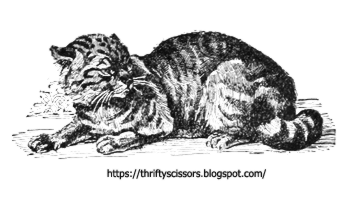
Wild Cat

Wild Cat or Catamount, a wild animal belonging to the same family as the domestic cat, but of larger size than the latter. The European wild cat once common, but now seen only in the most isolated regions, has a very long body and legs and a short, thick tail. Its fur is yellowish-gray, with a dark marking down the back and other dark stripes on the sides and rings on the tail. In the United States the name is often applied to the lynx.

More About Wild Cats From The Web:

Friday, July 17, 2020

Whip-poor-will


       Whip-poor-will, a North American bird of the goatsucker family. The name is an imitation of the bird's peculiar call of three shrill notes ending in a rising inflection.  This weird cry is repeated many times in close succession. The whippoorwill makes its home in the midst of thick woods, rarely visiting the haunts of men. It is active at night, feeding on night insects, which it catches on the wing. During the day it sits lengthwise on a limb, where, owing to its mottled plumage, it is not easily seen.


More About Whip-poor-wills On The Web:

Vulture

Vultures are characterized by their
featherless necks.
       Vulture, the common name for a class of carrion-eating birds, characterized by necks destitute of feathers and by elongated beaks, with curved upper mandibles. Their talons are not relatively strong, and in tearing prey apart, they make more use of their beaks than of their claws. Vultures are usually of a cowardly disposition and will not attack live animals, unless the latter are seriously wounded or dying, as they feed almost entirely on decaying animal flesh. They fly high in the air and detect their prey from great distances. They are valuable scavengers in all warm and tropical countries. 

Two More Vulture Types:
       The California vulture has a long, flat, orange-colored head and dull black plumage, with a grayish wing band. It builds a loose nest of sticks, in a hollow in a tree or cliff, and lays one round, greenish-white egg. 
       The Egyptian species, called "Pharaoh's hen," is found in the countries bordering the Mediterranean.

More From The Web About Vultures:

Wagtail

Courtship of wagtails caught on
 video by Shirishkumar Patil.

       The wagtail are a group of birds so called from their habit of jerking their long tails when running or perching. Though several species are common in Europe, rarely is the bird seen in the United States. The wagtails frequent muddy lands and pastures, running rapidly along the edge of water and catching the insects they find there. A species of wagtail breeds on the coasts of Alaska in summer, making its nest of woven roots and grasses on or near the ground. The eggs are white with brown spots.

Learn More About Wagtails From The Web:

Whales: 12 Facts About Whales

Whales come in two classifications:
those with teeth and those without.
   The whale, a large marine animal, some species of which are the largest animals in existence. Though often classed as a fish, the whale bears only a superficial resemblance to the fishes. The tapering body terminating in a finlike tail and the fin-shaped paddle on each side of the body are the only points of similarity, while the dissimilarities are numerous and fundamental.

12 Facts About Whales:
  1. The whale first of all, is a mammal, bearing its young alive, and suckling it in infancy.
  2. It has well-developed brain and lungs, and warm blood, which circulates through veins and arteries. 
  3. Its bones, joints and muscles are like those of the higher land mammals. 
  4. The forelimbs contain the same bones as do those of other mammals. These are proportionately short, and, instead of toes, there is a paddle, about seven feet long, formed by a continuous skin; while in the rear part of the body are rudimentary bones which indicate the existence of hind legs in remote ancestors. 
  5. The organ of locomotion is the fin-shaped tail, which is also used for purposes of defense. 
  6. The whale is a shy creature and becomes combative only when attacked. 
  7. When aroused it can capsize a large vessel with its tail, which is from five to six feet long and twenty to twenty-five feet broad, and destroy smaller craft by ramming it with its blunt nose.
  8. Two distinguishing characteristics of whales are the proportionately large head, which is usually a third of the entire length of the body, and the thick layer of fat beneath the skin, which protects the animal from the cold. 
  9. This fat, called blubber, was cut from the captured animal and reduced to oil many years ago. Before mineral oils came into general use, whale oil was burned in lamps in every part of the world.
  10. The eyes of whales are small and there is usually only one nostril, frequently S-shaped, situated on top of the head. It is closed by a plug-like valve, opened only by pressure from inside. 
  11. When the whale comes to the surface it expels the air from its lungs with great force through this nostril; and the hot, moisture-laden breath condensing in the cold air produces a column of vapor several yards high. 
  12. The notion that a whale takes water into its mouth and blows it out through this hole is erroneous. The whale's mouth is large, but the throat is very small; however, a species known as the Greenland whale has a throat large enough to admit a man's body.
Two Classes of Whales:
       Whales usually are divided into two classes - the whalebone whales and those having teeth. The toothless whales were commercially the more important, and are hunted for both oil and whalebone, which latter is taken from the animal's mouth. The roof of the mouth is provided with vertical horny plates, called baleen, about 500 in number. These plates hang from the roof of the mouth in a fringe ten or twelve feet long. This equipment serves as a sieve for straining out the minute animals on which these whales feed. The surface waters of the ocean teem with animal life, and whales in feeding swim with open mouth at high speed near the surface, traveling in this way until hunger is satisfied. The manufacture of cheap substitutes for whalebone greatly decreased the commercial importance of whalebone whales.
       The toothed whales are the larger, attaining a length of ninety feet and a weight of seventy tons. The young when born are from ten to fourteen feet long. Of these the sperm whale was the most valuable to hunters. The blubber produced sperm oil, while the oil of the head yielded spermaceti, used in making candles and cosmetics. Other valuable products made from this whale long ago were ambergris, found in the intestines and used in making perfumes.

Learn More About Whales From The Web:
       Before the middle of the eighteenth century whaling was an important industry, but since the discovery of petroleum it has rapidly declined. Modern whaling operations are conducted with swift vessels, and the whales are killed by harpoons shot from guns. On every coast where whale fishing is conducted there are stations along the shore to which the carcasses are towed and cut up and prepared for market. Since 1986, IWC, has banned the fishing for whales except by aboriginal peoples.

Save The Whales From Extinction:
See People Work Hard To Save These Endangered Giants:
Now People Perform For Whales:

Bat: 11 Facts

A bat is a furry mammal having the fore limbs peculiarly modified so as to serve as wings. Bats are animals of the twilight and darkness and are common in temperate and warm regions, but they are most numerous and largest in the tropics. 

11 Facts About Bats:
  1. All European bats are small and have a mouselike skin. 
  2. The body of the largest British species is smaller than that of a mouse, but its wings stretch about fifteen inches. 
  3. During the day it remains in caverns, in the crevices of ruins, hollow trees and other lurking places, and flits out at evening in search of food, which consists of insects. 
  4. Several species of the same genus are common in North America. 
  5. Many bats are remarkable for having a curious growth on the nose shaped something like a horseshoe. In some bats these growths resemble leaves, and in one species the entire nose looks like a flower. 
  6. The eyes in most bats are very small, but they are keen.
  7. Bats may be conveniently classified in two sections: the flesh-eating, comprising all European and most African and American species, and the fruit-eating, belonging to tropical Asia and Australia, with several African forms. 
  8. At least two species of South American bats are known to suck the blood of other mammals, and hence they are called vampire bats, though the name has also been given to a species not guilty of this habit. 
  9. As winter approaches, in cold climates bats seek shelter in caverns, vaults, ruined and deserted buildings and similar retreats, where they cling together in large clusters, hanging head downward, and sleep until the returning spring recalls them to life. 
  10. The brown bat of the United States, the heavy bat of the Eastern states, the big-eared bat of the Mississippi valley, the leaf-nosed bat and the lyre bat are common species. 
  11. Bats belong to the order Chiroptera

The types of bats pictured above with corresponding numbers.

1-2: Brown Long-eared Bat
3: Lesser Long-eared Bat
4: Lesser False Vampire Bat
5: Big-eared Woolly Bat
6-7: Tomes's Sword-nosed Bat
8: Mexican Funnel-eared Bat
9: Antillean Ghost-faced Bat
10: Flower-faced Bat
11: Greater Spear-nosed Bat
12: Thumbless Bat
13: Greater Horseshoe Bat
14: Wrinkle-faced Bat
15: Spectral Bat

Scotch Terrier


       The Scotch Terrier is a small dog weighing from fourteen to twenty pounds, with a long head, dark eyes and upright ears. The hair is rough and coarse, and may be black, reddish, brindled or sandy. The tail is carried erect. The dogs are intelligent, gentle and active and were favored pets seventy years ago.

More About Scotch Terriers From The Web: