Sunday, October 20, 2013

Feelings Faces Game for Halloween

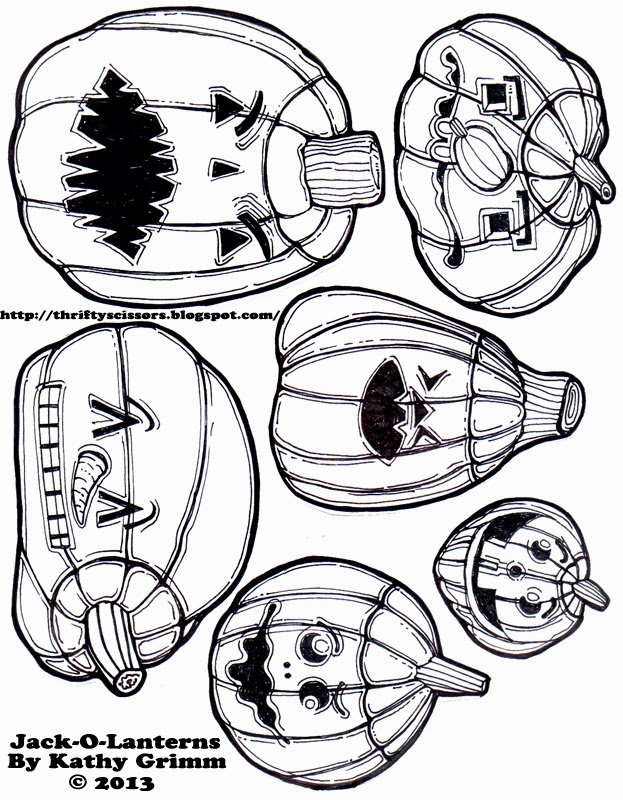
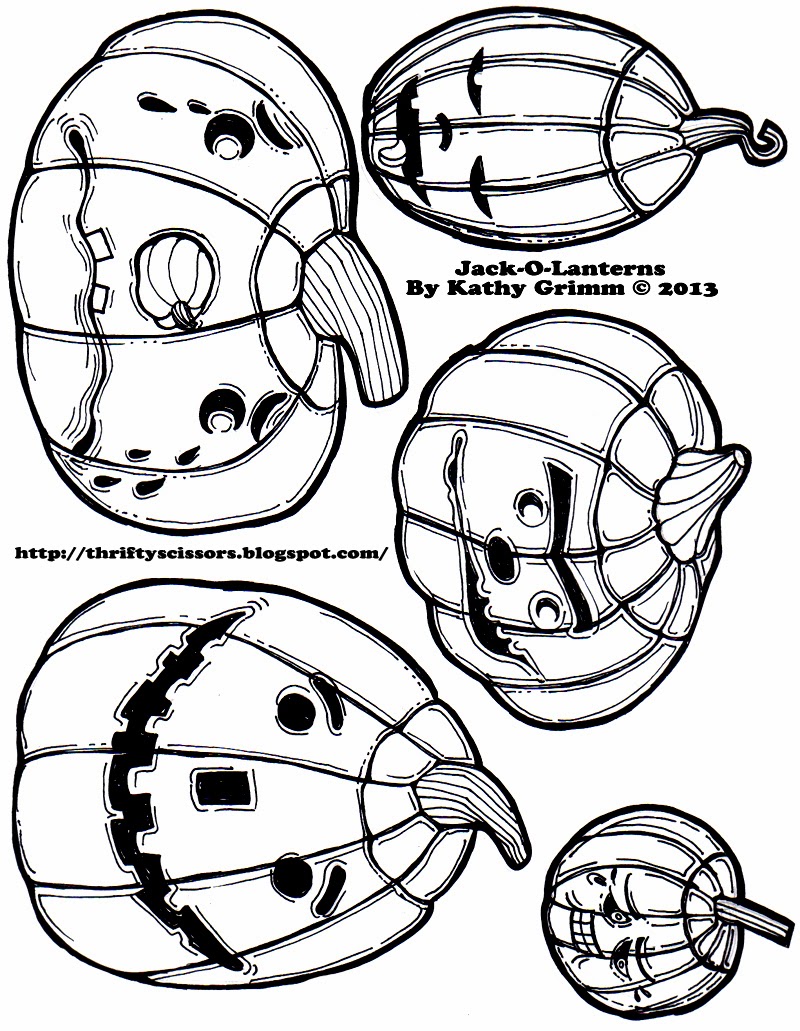
      My little Jack-O-Lanterns are full of all kinds of emotions! Teachers will need to print two copies each of every sheet attached to the post below in order to play this Halloween matching game with their class.
      For younger students turn the cards face up on a carpet or table so that all of the emotions can be seen. Now ask each player taking a turn to match up one Jack-O-Lantern with it's twin and then talk about "how" the Jack-O-Lanterns are feeling. Ask the student about the incidents that make him or her feel angry, disappointed, frightened, sad, happy, excited or anxious etc...
      If your students are a bit older, in 1rst or 2nd grade, turn the cards face down during the game so that your students must also identify the matching abstract shapes of the pumpkins. 
      Let your students identify the feelings of the pumpkins on their own. Younger children will give general descriptions of their faces, older students may be more specific about the expressions. What is important about the game is that a students is able to actually match the identical facial features and shapes.

Teach young learners about emotions with these fun little free Jack-O-Lantern faces by Grimm.
Crying Jack-O-Lanterns shown crying. Print out the patterns twice to make this feelings face game by Kathy Grimm.


      Learn more about how to use facial expressions in order to develop social emotional skills watch the video below by Childswork Childsplay. You can purchase their game, "The Understanding Faces Game," here.

Wednesday, October 16, 2013

The Frost

By Hannah Flagg Gould.

The Frost looked forth, one still clear night,
And he said, "Now I shall be out of sight;
So through the valley and over the height
In silence I'll take my way,
I will not go like that blustering train,
The wind and the snow, the hail and the rain,
Who makes so mush bustle and noise in vain;
But I'll be as busy as they!"

Then he went to the mountain, and powdered its crest,
He climbed up the trees, and their boughs he dressed
With diamonds and pearls, and over the breast
Of the quivering lake he spread
A coat of mail, that it need not fear
The downward point of many a spear
That he hung on its margin, far and near,
Where a rock could rear its head.

He went to the windows of those who slept,
And over each pane like a fairy creaft;
Wherever he breathed, wherever he stepped,
By the light of the moon were seen
Most beautiful things. There were flowers and trees,
There were bevies of birds and swarms of bees, 
There were cities, thrones, temples and towers, and 
these
All pictured in silver sheen!

But he did one thing that was hardly fair--
He peeped in the cupboard, and finding there
That all had forgotten for him to prepare--
"Now just to set them a-thinking,
I'll bite this basket of fruit," said he;
"This costly pitcher I'll burst in three,
And the glass of water they've left for me
Shall "tchick" to tell them I'm drinking."

Tear and Paste Falling Leaves

      Young students will enjoy tearing and pasting fall leaves in order to recreate a lovely Autumn scene. The teacher will need to cut a simple tree trunk to cover the length of a large standard sized piece of grey construction paper. He or she will also need to cut rakes from dark brown construction paper in advance. I have included two patterns for the rakes below.
  1. Give each young students brightly colored fall papers to tear for the leafs in this picture. 
  2. After pasting their tree trunk onto their grey paper, students will need to paste and arrange brightly colored shredded papers on the tree, falling from the tree and in a large pile at the foot of the tree. This simple art project could take up to twenty five or thirty minutes depending upon the attention span of the participants. 
  3. Play a selection of music during the activity to enhance the experience for your young students. 
  4. After they have built up enough leaves under their fall tree, glue the ladder over them and leaning up against the tree. 
  5. Don't forget to pinch the ends of the rake to form an angle. 
  6. After the glue has dried, give the students a dark brown marker and encourage them to draw grooves into their tree trunk for added effect.
The young students at the early learning center are shredding fall colored papers for their simple rake pictures.
 I have included the simpler rake pattern below for those of you who would prefer to make a simpler version of
 the art lesson.

Sunday, October 13, 2013

Create Fall Leaf Patterns

      This design project is best suited to students in fourth, fifth and sixth grades.

Materials:
  • Black permanent markers, a variety of tip sizes
  • 81/2'' x 11" white drawing paper
  • extra scratch papers for cutting out stencils
  • pencil and eraser
  • a collection of fall leaves
  • a variety of colored felt tip pens
  • scissors
Step-by-Step Directions:
  1. Students will first need to collect a minimum of seven leaves and trace around them to create their own stencils. 
  2. After cutting out the patterns, students should then move them around an 81/2 inch x 11inch sheet of white drawing paper. 
  3. The leaves should be large enough so that they will overlap a bit when traced onto the white drawing paper.       
  4. Next the spaces which overlap should be filled in with solid black ink. 
  5. Now challenge the students to draw a different patterned design in every remaining positive and negative space, neatly using black ink only.
  6. Students should ink in select parts of the designs only.
  7. After completing this part of the design project they may color in their fall leaf patterns with an assortment of colors representing an Autumn color palette.
More Black and White Design Inspiration:
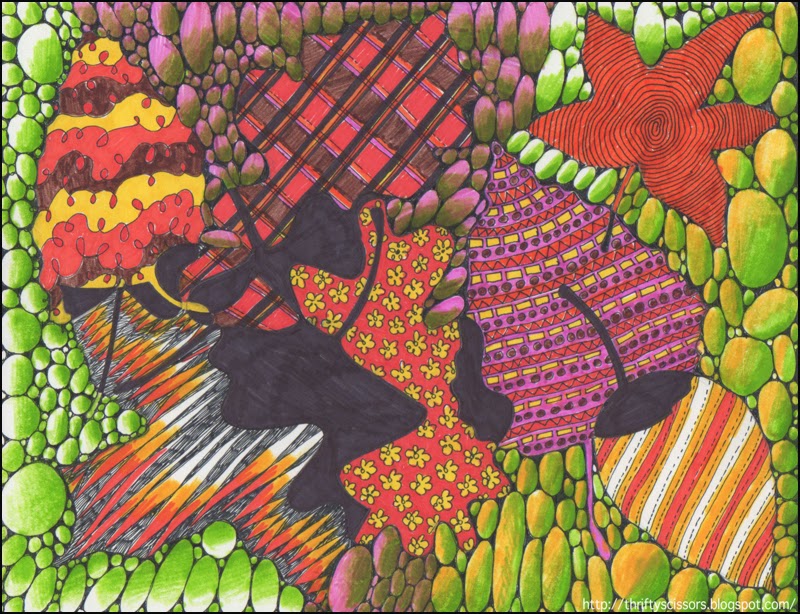
Above, the hand colored finished fall leaf, art assignment.

A Fall Collage Featuring An Owl

       Collage (From the French: coller, to glue) is a technique of an art production, primarily used in the visual arts, where the artwork is made from an assemblage of different forms, thus creating a new whole. Above you can see that I began this collage using a template of an owl that I cut from heavy construction paper.
      A collage may sometimes include newspaper clippings, ribbons, bits of colored or handmade papers, portions of other artwork or texts, photographs and other found objects, glued to a piece of paper or canvas. The origins of collage can be traced back hundreds of years, but this technique made a dramatic reappearance in the early 20th century as an art form of novelty.
      For this fall collage I used wood chips, pom-poms, acorn caps, painted and stamped papers and magazine clippings along with a few markers: brown, white, black and yellow. I will give my younger students templates to trace around. The older students will be required to draw their own owl designs.
      The term collage derives from the French "coller" meaning "glue". This term was coined by both Georges Braque and Pablo Picasso in the beginning of the 20th century when collage became a distinctive part of modern art. Owls were popular subjects for both cubists to include in their still life art works as well!
      I pasted some real feathers into my collage to finish off my teacher sample.

See More Owl Collage Lessons and Ideas:

Friday, October 11, 2013

The Elf and The Dormouse

By Oliver Herford

Under a toadstool crept a wee Elf,
Out of the rain, to shelter himself.

Under the toadstool sound asleep,
Sat a big Dormouse all in a heap.

Trembled the wee Elf, frightened, and yet
Fearing to fly away lest he get wet.

To the next shelter-maybe a mile!
Sudden the wee Elf smiled a wee smile.

Tugged till the toadstool toppled in two.
Holding it over him, gayly he flew.

Soon he was safe home, dry as could be.
Soon woke the Dormouse-"Good gracious me!"

"Where is my toadstool?" loud he lamented,
And that's how umbrellas first were invented.

Thursday, October 10, 2013

Widdy-Widdy-Wurky

This little song from 1911 (French?) is perfect for an early learning center's student performance at a Thanksgiving Play or festival. It is simple enough for little ones to memorize and silly enough for them to enjoy doing it! Don't forget to dress your performers up in costume.
This is sung by the children in a semicircle. They come in a single file. Each child takes the name of an animal, and as each name is mentioned, the child whose name it is must clap hand in time. All clap hands together. At the end all march out, the leaders first, each child falling into place as his or her name is mentioned. Go round in single file once and then out.

Widdly-widdy-wurkey I call my fat turkey, 
Sit-a-gain is my hen,
Feather-er-loose, is my goose,
Widdly-widdy-wurkey I call my fat turkey.

Widdly-widdy-wurkey I call my fat turkey,
Quacky-wuck is my duck,
Velet-mat is my cat,
Widdly-widdy-wurkey I call my fat turkey,

Widdly-widdy-wurkey I call my fat turkey,
Shiny-coat is my goat,
Tub-of-wine is my swine,
Widdly-widdy-wurkey I call my fat turkey,

Widdly-widdy-wurkey I call my fat turkey,
Run-a-course is my horse,
Milkey-ow is my cow,
Widdly-widdy-wurkey I call my fat turkey,

Widdly-widdy-wurkey I call my fat turkey,
What's-o'clock is my cock,
Run-around is my hound,
Widdly-widdy-wurkey I call my fat turkey,

Widdly-widdy-wurkey I call my fat turkey,
Nice-look-out is my house,
Dart-about is my mouse,
Widdly-widdy-wurkey I call my fat turkey,

Widdly-widdy-wurkey I call my fat turkey,
Yes-I-can is my man,
Whirley-wind is my child,
Widdly-widdy-wurkey I call my fat turkey!

The Circus Day Parade

Oh the circus-day parade! How the bugles played and played!
And how the glossy horses tossed their flossy manes and neighed,
As the rattle and the rhyme of the tenor-drummer's time
Filled the hungry hearts of all of us with melody sublime!

How the grand band-wagon shone with a splendor all its own,
And glittered with a glory that our dreams had never known!
And how the boys behind, high and low of every kind,
Marched in unconscious capture, with a rapture undefined!

How the horesmen, two and two, with their plumes of white and blue,
And of crimson, gold and purple, nodding by at me and you,
Waved the banners that they bore, as the knights in days of yore,
Till our glad eyes gleamed and glistened like the spangles that they wore!

Wednesday, October 9, 2013

The Snowman Song


Original Poem By W. W. Ellsworth (verses of song)
Chorus lines by Kathy Grimm

One day we built a snowman.
We made him out of snow;
You'd ought to see how fine he was--
All white from top to toe!

we built a little snowman, as soon as it grew cold!
we built a little snowman, he'll melt as he grows old!

We poured some water on him,
And froze him, legs and ears;
And when we went indoors to bed
I said he'd last two years.

we built a little snowman, as soon as it grew cold!
we built a little snowman, he'll melt as he grows old!

But in the night a warmer kind
Of wind began to blow,
And winter cried and ran away,
And with it ran the snow.

we built a little snowman, as soon as it grew cold!
we built a little snowman, he'll melt as he grows old!

And in the morning when we went
to bid our friend good day,
There was n't any snowman there--
Everything had runned away!

we built a little snowman, as soon as it grew cold!
we built a little snowman, he'll melt as he grows old!

Students can sing this poem to the "The Dreidel Song." Read more about dreidels here. Listen to the original tune below and learn about the little Hannukah game.


More Little Snowman Songs on Video:

How to Draw: A Cow

Step-by-Step way to both fold paper to draw a cow's head and also how to draw
details of the cow's features.


Directions for Drawing A Cow: Fold a square sheet of paper from corner to corner in every direction before drafting the proportions of this cow's head. This simple exercise teaches young students to use basic geometry to draw a cow.

The Cow
by Robert Louis Stevenson

The friendly cow, all red and white,
I love with all my heart;
She gives me cream with all her might,
To eat with apple tart.

She wanders lowing here and there,
And yet she cannot stray,
All in the pleasant open air,
The pleasant light of day.

And blown by all the winds that pass
And wet with all the showers,
She walks among the meadow grass
And eats the meadow flowers.

How to Draw: Old-Fashioned Airplanes

Would you like to learn how to draw old-fashioned airplanes?
Above are three classic examples that teachers and parents
may print out for their young plane enthusiasts to copy step-by-step.

How to Draw: The Head of A Horse

Many young students love to practice drawing animals even though it is near to impossible to give them opportunities to do so from real life in a classroom environment. Above is a simple step-by-step, how to exercise in drawing a horse up close that educators may either print out or project on to a white board. This exercise uses triangle shapes to determine proportions of the horses head.