As in the blade of grass and in the smallest herb, the first years of our globe gave signs of the coming tree; as in the first drops of rain there was the promise of a coming ocean; as in the little garden of Eden there lay the prophecy of future homes, so the earliest instincts and affections of animal life were advance heralds of a profound devotion destined to appear in the form of a mother's love. Each wild beast which to the death would defend its young, each bird that screamed and fluttered when an enemy approached its nest, said in distinct accents that Nature was preparing the way for that sublime sentiment‚ human love. No wonder, then, that when writers, sacred or profane, have desired to convey some adequate notion of the love of God for His universe, they have always asked us to look upon a mother and her child. In that love we find all the heights and depths of sentiment, and when we have compared God to a loving mother, we can say no more‚ our richest emblem is then exhausted. By Professor Swing.

Sunday, January 7, 2018
A Proclamation
By The President of The United States of America
Woodrow Wilson.
By the President:
William Jennings Bryan,
Secretary of State.
(Seal)
Whereas, By a Joint Resolution approved May 8, 1914, "designating the second Sunday in May as Mother's Day, and for other purposes," the President is authorized and requested to issue a proclamation calling upon the government buildings, and the people of the United States to display the flag at their homes or other suitable places on the second Sunday in May as public expression of our love and reverence for the mother of our country;
And Whereas, By the said Joint Resolution it is made duty of the President to request the observance of the second Sunday in May as provided for in the said Joint Resolution:
Now, Therefore, I Woodrow Wilson, President of the United States of America, by virtue of the authority vested in me by the said Joint Resolution, do hereby direct the government buildings and do invite the people of the United States to display the flag at their homes or other suitable places on the second Sunday in May as a public expression of our love and reverence for the mothers of our country.
In witness whereof I have set my hand and caused the seal of the United States to be hereunto affixed.
Done at the city of Washington this ninth day of May, in the year of our Lord one thousand nine hundred and fourteen, and the Independence of the United States one hundred and thrity-eight.
Woodrow Wilson.
By the President:
William Jennings Bryan,
Secretary of State.
(Seal)
The History Behind Mother's Day
Friday, January 5, 2018
An Easter Greeting To Every Child Who Loves "Alice"
Dear Child:
Please to fancy, if you can, that you are reading a real letter, from a real friend whom you have seen, and whose voice you can seem to yourself to hear, wishing you, as I do now with all my heart, a happy Easter.
Do you know that delicious, dreamy feeling, when one first wakes on a summer morning, with the twitter of birds in the air, and the fresh breeze coming in at the open window, when, lying lazily with eyes half shut, one sees as in a dream green boughs waving, or waters rippling in a golden light? It is a pleasure very near to sadness, bringing tears to one's eyes like a beautiful picture or poem. And is not that a mother's gentle hand that undraws your curtains, and a mother's sweet voice that summons you to rise?, to rise and forget, in the bright sunlight, the ugly dreams that frightened you so when all was dark‚ to rise and enjoy another happy day, first kneeling to thank that unseen Friend who sends you the beautiful sun?
Are these strange words from a writer of such tales as Alice? And is this a strange letter to find in a book of nonsense? It may be so. Some perhaps may blame one for thus mixing together things grave and gay; others may smile and think it odd that any one should speak of solemn things at all, except in church and on Sunday; but I think‚ nay, I am sure‚ that some children will read this gently and lovingly, and in the spirit in which I have written it.
For I do not believe God means us thus to divide life into two halves‚ to wear a grave face on Sunday, and to think it out of place to even so much as mention Him on a week-day. Do you think He cares to see only kneeling figures, and to hear only tones of prayer; and that He does not also love to see the lambs leaping in the sunlight, and to hear the merry voices of the children as they roll among the hay? Surely their innocent laughter is as sweet in His ears as the grandest anthem that ever rolled up from the " dim, religious light " of some solemn cathedral.
And if I have written anything to add to those stories of innocent and healthy amusement that are laid up in books for the children I love so well, it is surely something I may hope to look back upon without shame and sorrow (as how much of life must then be recalled!) when my turn comes to walk through the valley of shadows.
This Easter sun will rise on you, dear child, feeling your "life in every limb," and eager to rush out into the fresh morning air‚ and many an Easter-day will come and go before it finds you feeble and gray-headed, creeping wearily out to bask once more in the sunlight; but it is good, even now, to think sometimes of that great morning when the " Sun of Righteousness shall arise with healing in his wings."
Surely your gladness need not be less for the thought that you will one day see a brighter dawn than this‚ when lovelier sights will meet your eyes than any waving trees or rippling waters‚ when angel hands shall undraw your curtains, and sweeter tones than ever loving mother breathed shall wake you to a new and glorious day‚ and when all the sadness and the sin that darkened this life on this little earth shall be forgotten like the dreams of a night that is past!
Your affectionate friend,
Easter, 1876. Lewis Carroll.
Easter Index/ Previous Page/ Next Page
Easter Wings by George Herbert
 |
| Butterfly hatching from an egg... Resurrection symbol |
LORD, WHO GREATEST MAN IN WEALTH AND STORE,
THOUGH FOOLISHLY HE LOST THE SAME,
DECAYING MORE AND MORE,
TILL HE BECAME
MOST POOR.
WITH THEE
OH LET ME RISE
AS LARKS, HARMONIOUSLY,
AND SING THIS DAY THY VICTORIES:
THEN SHALL THE FALL FURTHER THE FLIGHT IN ME.
MY TENDER AGE IN SORROW DID BEGIN :
AND STILL WITH SICKNESS AND SHAME
THOU DIDST SO PUNISH SIN,
THAT I BECAME
MOST THIN.
WITH THEE
LET ME COMBINE,
AND FEEL THIS DAY THY VICTORY
FOR IF I IMP MY WING ON THINE,
AFFLICTION SHALL ADVANCE THE FLIGHT IN ME.
Easter Morning

Easter Morning
by Edmund Spenser
Most glorious Lord of life, that on this day
Didst make thy triumph over death and sin,
And, having harrowed hell, didst bring away
Captivity thence captive, us to win;
This joyous day, dear Lord, with joy begin,
And grant that we, for whom thou diddest die.
Being with Thy dear blood clean washed from sin,
May live forever in felicity:
And that Thy love we weighing worthily.
May likewise love Thee for the same again:
And for Thy sake, that all like dear didst buy,
With love may one another entertain.
So let us love, dear love, like as we ought;
Love is the lesson which the Lord us taught.
Didst make thy triumph over death and sin,
And, having harrowed hell, didst bring away
Captivity thence captive, us to win;
This joyous day, dear Lord, with joy begin,
And grant that we, for whom thou diddest die.
Being with Thy dear blood clean washed from sin,
May live forever in felicity:
And that Thy love we weighing worthily.
May likewise love Thee for the same again:
And for Thy sake, that all like dear didst buy,
With love may one another entertain.
So let us love, dear love, like as we ought;
Love is the lesson which the Lord us taught.
Egg Rolling
"One of the annual sights in the city of Washington is Easter egg rolling on the White House grounds, on Easter Monday, in which several thousand children usually take part. The game is played in pairs, each player having one egg. These are rolled down hill, the unbroken egg taking its rival, if the latter is cracked.
This custom probably came from Germany, where, at Easter-time, egg rolling is practiced on tracks made of sticks, laid side by side. In Germany the sport begins Easter-eve at midnight, and lasts about three hours. Apples and little round cakes are rolled as well as eggs.
In Bohemia, children roll eggs in a row, starting them all at once, and watching to see which will reach the bottom of the hill first.
In the north of England, eggs are used in playing hand ball on Easter-day." by Sandham, 1916
Egg Roll in D.C. 2012
Thursday, October 12, 2017
The Chiva Bus Parade
 |
| Chivas come from Columbia, South America. |
 |
| These artisan rustic buses are adapted to rural transport. |
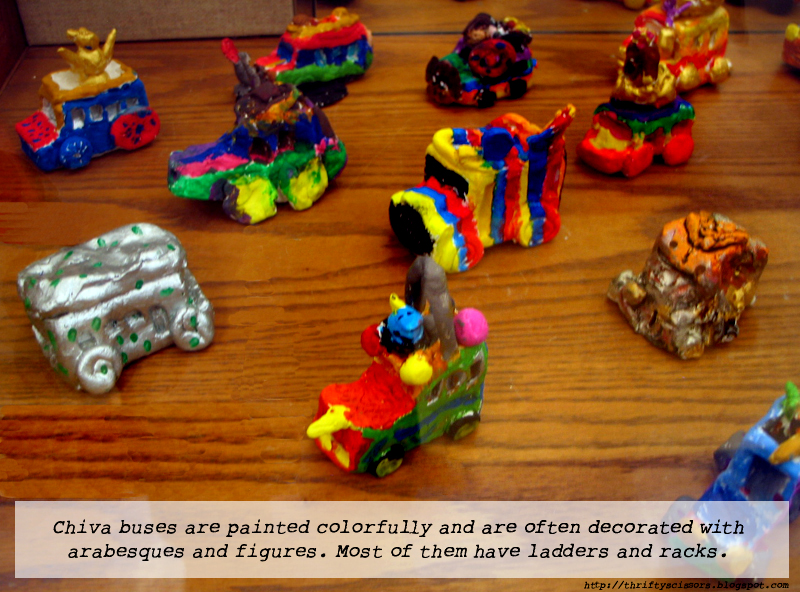 |
| Chivas must carry passengers, luggage, and sometimes even domestic animals over mountainous terrain. |
These buses are built tough and can plow through
just about anything, including mud!
Wednesday, October 11, 2017
The Four Seasons Index
The four periods into which the year is divided by the ever-changing position of the earth in relation to the sun. As the earth revolves about the sun in nearly circular obit, its axis at all times points toward the Pole Star and is inclined to the plane of its orbit 23 1/2 degrees. Therefore different parts of its surface are at different times of the year exposed to the vertical rays of the sun. Astronomically speaking, in the northern hemisphere spring extends from March 21, the time of the vernal equinox, to the summer solstice, June 21; summer from June 21 to September 21, the time of the autumnal equinox; autumn to December 21, and winter from that date to the beginning of spring. In the southern hemisphere the seasons are reversed, and spring begins September 21. In the torrid zone the changes in the seasons are not marked by differences in temperature, but by wet and dry periods.
Artifacts included here come from several of my blogs featuring the holidays and/or weather related content.
Artifacts included here come from several of my blogs featuring the holidays and/or weather related content.
For All Seasons:
 |
| Woven tree art project may be used to incorporate any season: Spring, Summer, Fall or Winter, depending on the landscape and colors used in the selection of yarns as well. |
- The Mist and All
- Craft a Fall Landscape Using Leaf Rubbings
- Shape a pinch pot acorn
- Craft a Paper Scarecrow Jumping-Jack
- Draw a Scarecrow Emphasizing The Use of Pattern(s)
- Harvester Picture Puzzle
- Practice Shading An Owl
- "When the Frost Is On The Punkin"
- Cut & Paste Popped Corn On the Cob
- A Wise Old Owl
- A Fall Leaf Craft for Two and Three Year Olds
- The Frost
- Tear and Paste Falling Leaves
- Create Fall Leaf Patterns
- A Fall Collage Featuring An Owl
- The Karo Corn Maiden Coloring Sheet
- "In October" Poem
- "The Cornstalk's Lesson" Poem
- Pumpkin and Jack-O-Lantern Number Books
- "Roasting Corn" Poem
- Paint Fall Foliage With Hugs and Kisses
- Paint, Cut and Paste a Leafy River Scene
- Craft a Paper War Bonnet
- Draw a Design from A Spider's Web
- Craft a Ruote Paste Web
- Draw a Shaded White Spider Web
- Wad, Wrap and Tape a Fall Pumpkin Craft
- Weave Indian Corn for Autumn Fun!
- Autumn
- Lessons: Pumpkin Soup
- "Little Jack Frost" poem
- Find The Acorns Puzzle
- Acorn poem by Edith King
- "When Winter Comes"
- A stacked felt Christmas tree
- The Snow Bird
- Christmas Paper Plate Snow Globe
- Mark The Soft-Falling Snow
- How Teachers Can Craft a Giant, Recyclable, Snowman for Their Classrooms
- Sculpt a snow scene with clay
- Jest 'Fore Christmas
- The Snowman Song
- 12 Six-Sided Snowflake Templates
- Sliding Down Hill
- Little Ones Can Print Snowmen With Their Hands
- Make pine cone Christmas trees
- Search for Winter Fun coloring sheets
- Snow-Flakes
- Rotating Library for Winter Book Themes
- Windy Poems
- Snowdrops
- The Snowman's Resolution
- The Snow Storm
- A Winter Artist
- Craft a Snowy Mobile!
- Stencil Rabbits Eating Clover
- 7 Gardening Books for Kids
- Draw a mother hen and her chicks
- Craft a Simple Butterfly Mask
- Color Alphabet Chicks
- Craft a Very Hungry Caterpillar
- Frogs, Toads and Pollywogs for Spring
- Positive and Negative Bunnies
- Doodle an Easter bunny or chick
- Repeating Line Butterfly Design
- The Living Butterfly
- A Tisket, A Tasket, A Green and Yellow Basket
- Dunking Ducks
- Create a Butterfly Yarn Picture
- Craft a Paper Robin Toy for Spring
- "Handy" little butterflies
- Decorative Bird Box - design and finish
- Draw a Bunny Portrait
- Drawing Butterflies Through Five Progressive Steps
- Craft Doily Butterflies
- Search for Rainy Days and Rainbow Coloring Sheets
- Search for Garden and Flower Coloring Sheets
- The Rain Regiment
- The Shadow
- The Merry Breeze
- How Mother Nature Cleans
- Caterpillar On The Wall
- Rain In Summer
- Salt Lifting Some Sand Castles
- Children love to paint rock pets
- Glue together a shell mosaic box
- Search for camping and scouting coloring sheets
- Weave Some Yarn Trees!
- Grasshopper Green
- The Cloud House
- Fire Flies
Check out more weather related artifacts from popular collections across the web...
Additional Four Seasons Crafts:
Additional Four Seasons Crafts:
- Four Seasons Tree Craft from easypeasyandfun
- 4 Season Felt Board Craft by Amanda
- Four seasons hand print craft from funnycrafts
Index last updated on January 19, 2025
Weave Some Yarn Trees!
 |
| Use a fast drying paint for the first half of this art assignment so that the paper plates will not warp. |
This weaving project is accomplished in two parts. Above is the first part of the assignment. Teachers review or teach for the first time what a landscape is in art. Then students paint their own version of a landscape using acrylic or tempera paints, whichever is available in their classroom, on the inside of a paper plate. Make sure they include a foreground and a background. Above you can see that there is a nice variety of landscapes represented by these students: a green park-like setting, a couple of deserts including cactus and a glimmering lake with a rainbow above it. Below a student painted a lush green and blue mountain landscape with a white fluffy cloud hovering above.
 |
| The worp of the tree branches is strung around the notches above and tied off at the bottom. |
For the second half of this art lesson, students will need yarn and scissors to notch the edges of their paper plate. These notches do not need to be exactly placed. In fact if the notches are a bit off, the result can be quite charming. Wrap the worf of the tree in and out of the notches as shown above.
 |
| The simple process of wrapping a yarn tree trunk. |
At the bottom of the plate, where there are only two notches, students will need to wrap a smaller length of yarn to form the trunk of their tree. they should make this trunk approximately one to two inches in length.
 |
| A colorful assortment of woven trees from these second and third grade students. |
Next, student weavers may pull yarn lengths in and out of the worp forming what is called the weft of the weave. They may choose to make a striped pattern to represent the leaves of their trees if they wish. All in all this makes quite a striking art exercise when completed!
Part 1 of the weaving project from Cassie Stephens.
This is a snow scene.
More Woven Trees:
Sunday, October 8, 2017
Quick & Easy Bulletin Board!
 |
| Sometimes, teachers over think things like bulletin boards. Tack up a bright butcher paper to cover an old cork bulletin board and then let your students do the rest! I contributed a few scissors and glue bottles while everyone else laughed and scribbled. |
Young students should be allowed to feel they have a say in how their everyday spaces look. This bulletin board was decorated by kids in an after school kid care program. I hung up their paper puppets, drawings, and coloring sheets in just a few minutes. This old cafeteria never looked so colorful! I think they did a great job!
 |
| On the upper left hand corner of the bulletin board I stapled the "visual" directions of how to assemble the turtle puppet. 1. color, 2. cut, 3. paste. The bulletin board was then filled in with the children's crafts. It got even fuller than what is depicted above over the following weeks. |
Saturday, October 7, 2017
The Paper Town Hall from Cut-Out Town
 |
| Directions for the Town Hall. Cut around the outlines. Fold on dotted
lines, tuck tabs inside and where shown paste together as drawn in the above "model" sketch. |
Well, just when I thought that I had found all of these little
village templates, out crops another one! Searching newspapers is a
tedious process, even for an archivist! But here is the Town Hall;
better late than never. I think it is the last of the series? I've cleaned it up, folks. Don't forget to enlarge it as much as possible before printing it out.
Tuesday, October 3, 2017
Paper Village Index
 |
| Samples of paper village buildings and dolls in this index. |
In this index, young visitors will find all sorts of paper playthings that will keep them preoccupied for hours or perhaps even days. There are paper people and animals to color, little art lessons including paper doll crafts and lots of templates for crafting paper buildings. Enjoy and don't forget to check back for new additions!
- The District School of Cut-Out Town
- Color and Cut Out These Victorian Paper Dolls
- Little Factory from Cut-Out Town
- Doll Quotes
- Mr. Roger's Neighborhood Resources
- Mermaid Paper Doll Parts
- "Myrtle" paper doll
- Cut and Paste Paper Pueblos
- Favela Painting
- Illustrated Objects for Designing 1880 Something Doll Houses
- Draw An Animal Hospital
- Some nursery furniture for the paper doll house
- Patterns for a Plains Indian village
- A Treehouse Collage
- Paper Doll Craft
- "Irene" paper doll
- Historic Paper Buildings at Greenfield Village
- Miniature Paper Kitchen Furnishings for Your Paper Dolls
- Craft Little Houses from Milk Cartons
- The Strangely Changing Face
- 100 Little Paper Villages: Mega List
- Rainy Day Paper Dolls
- Little Church from Cut-Out Town
- "Thomas" paper doll
- Paper Circus Performers for Little Ones
- The Little House from Cut-Out Town
- Weave a Paper Dress
- Paper Circus Toys for Young Students to Color
- The Little Store of Cut-Out Town
- "Clare" paper doll
- The Paper Town Hall from Cut-Out Town
 |
| Illustrations of a box apartment, it's windows, walls and a basic floor plan. |
How To Make A Box Apartment For Your Paper Dolls
Girls and boys who are fond of paper toys might enjoy making an apartment for their paper characters similar to the one pictured above. There is are also patterns for paper furnishings in the list above if they should choose to furnish their paper accommodations as well.
To make the apartment all that is necessary is a sturdy box 24 inches deep. These dimensions are the best for the size furniture that is published above, but if your box is an inch or two longer or shorter or wider or narrower it won't matter very much. If you can not secure a box that is at all near this size it is best to get a larger box and cut it down. A box may also be made of scrap cardboard of the proper dimensions.
The box is divided by a straight partition which goes down the center and two crosswise partitions, which divide the box into six rooms of equal size.
One long side of the box is taken off, as the apartment is to be entirely open across the front, and this sidepiece is used for the long partition which goes down the middle of the box. Before putting the partition in place you should make the doors which lead from one room to another and which are shown in the picture above. Also paper or color the partition with paints to suit the different rooms. In order to do this first decide what color you with for the walls in the rooms to be or if you would prefer; select a fancy scrap paper to paste on top of the walls instead. Divide the long partition into three equal parts by making slits which reach from the bottom half way up the side. Then cut the crosswise partitions long enough to span the box plus four inches deep. These may be cut from the box lid. Each of these crosswise pieces is divided in the middle by a slit which reaches from the top half way to the bottom. Fasten these cross partitions on the long partition at the places where it is cut and then place the partition unit inside the box temporarily to see where each section of wall comes. Then with a pencil mark on each side of the walls of every room which room it is, so that when you disassemble the partitions to paper or color the walls you will understand where everything should go. Paper or color the remaining wall sections inside the box to correspond appropriately.
Next cut the doors in the two partitions. There is a drawing of how these door frames could be finished in the illustration above. There are likewise window types drawn above that could be used as either templates for cutting or ideas for drawing directly on top of the walls of your apartment rooms.
Subscribe to:
Posts (Atom)